 11
11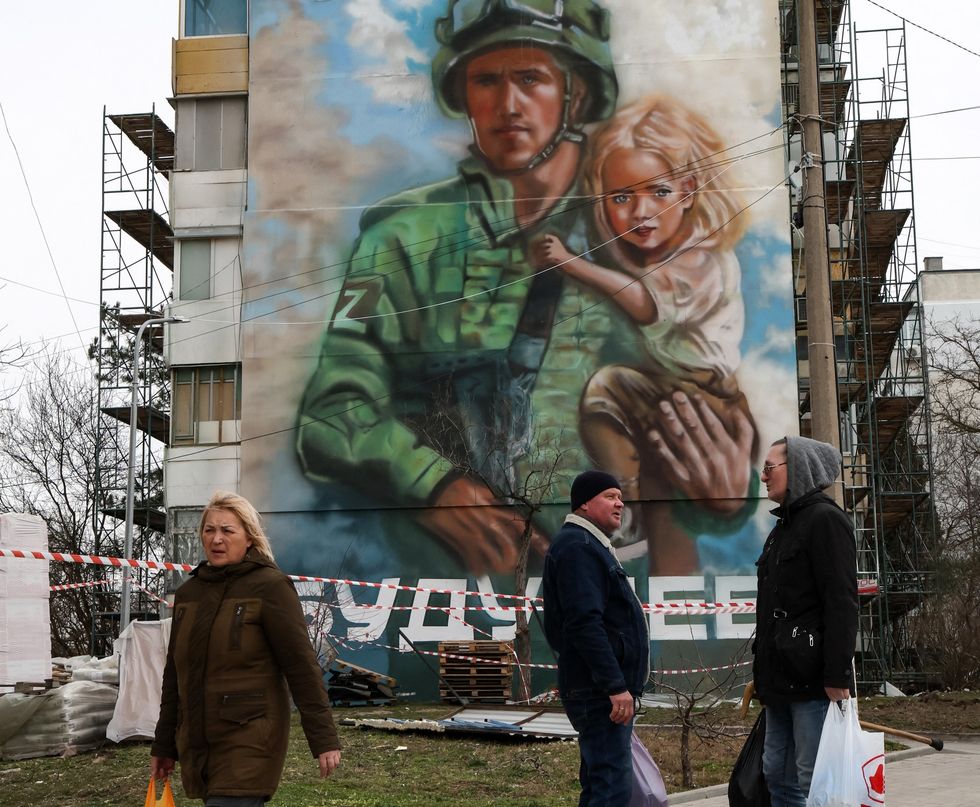
This is the second in a two-part series on Russian gray zone, or hybrid warfare. In the first article, Wiswesser analyzes the evolution of hybrid warfare and its practice in the decades leading up to Russia’s intervention in Ukraine in 2014.
Russia’s errors ultimately propelled it into a catastrophic all-out war in Ukraine in 2022. This article, which continues a study of Russia’s path to and through the Gray Zone, argues that tracing the evolution of Russian hybrid warfare through the lens of its intelligence services and their miscalculation is not merely an exercise in post-mortem analysis but a critical step toward more effectively deterring future Russian aggression.
With the intervention in Ukraine in 2014, Russia’s so-called “non-contact” or gray warfare doctrine had its first major operational test for Russia, marking it’s most significant use of hybrid warfare. From their perspective, the Russian intelligence services (RIS) and its military succeeded in stunting the actions of Europe and the U.S. when Russia took large portions of the Donbas and Crimea utilizing “little green men.” These were Russian GRU (military intelligence elite units), other Russian military units, and intelligence proxies acting in the interests of the state.
For Russian strategists, non-contact war was effective, and these conflicts laid the groundwork for the planning of Putin’s siloviki and “organs” of power—the FSB, GRU, and Russian Armed Forces – for a much larger invasion of Ukraine just 8 years later. Studying the run-up to Russia’s full-scale invasion in 2022, and its hybrid war plan, can help better prepare NATO for the subsequent potential Russian aggression against the Baltics or elsewhere.
2014-2015: Donbas, Crimea, and Syria
In the second decade of this century, as Russia’s debates over non-contact warfare continued within its military and intelligence agencies, planning started to counter what Russia viewed as undue influence from the West in the Caucasus, Central Asia, and most notably, Ukraine. It was the latter that Russia and Putin always considered unfinished business. Russian planners—initially a small group of Kremlin Siloviki and their staff from various ministries—were aware that their military was not prepared for a full-scale war with NATO and the West. Nevertheless, Moscow believed they controlled the narrative and that gaps in reforms of their military and air force could be offset by the RIS conducting sabotage, subversion, cyber warfare, and recruiting key defectors within the Ukrainian government.
The Ukraine interventions and insurgencies of 2014 carried out by Russia in the Donbas and Crimea were classic non-contact operations using reflexive control and malicious influence through the media. Russia’s narrative was circulated among sympathetic European politicians and elsewhere. The story of little green men and whether they “were or weren’t Russian troops” was propagated through active measures. This and other false stories about supposed Ukrainian fascism and atrocities gained significant traction, especially within Central Asian countries and among Russia’s allies. The narrative effectively prevented any unified response by the West and Europe until the occupation of Crimea and large parts of the Donbas became a fait accompli. For Russia, it was a major success.
Need a daily dose of reality on national and global security issues? Subscriber to The Cipher Brief’s Nightcap newsletter, delivering expert insights on today’s events – right to your inbox. Sign up for free today.
At the same time, with a major deployment to Syria to support and back President Assad, the Russian Aerospace Forces (renamed the VKS in 2015) gained valuable experience for its combat squadrons. In Syria, they practiced precision strikes, a key part of non-contact warfare, and demonstrated greater precision (than in Georgia) in the use of air power during strikes. Additionally, in Syria, RIS units like GRU Spetsnaz conducted operations embedded with various factions and partners on the ground.
This deployment gained momentum on the heels of the 2014 Ukrainian operations. It was a classic blend of gray zone operations between intelligence and military units. Syria was also seen as a chance for Russia to bleed green units in preparation for larger wars to come.
In Africa during this same period, Putin’s former cook, then an oligarch, Yevgenniy Prigozhin, used the Wagner Group, a private army, to prop up regimes friendly to Russia. Wagner was one of dozens of private military companies, also known as non-state actors, that Russia was using and continues to use to achieve strategic aims. They acted as mercenaries to repress citizens and dissent, intervening as henchmen for hire across Africa.
Still, there was one overarching strategic goal that Putin and all his services focused on—Ukraine. For Russia and its intelligence services in particular, Ukraine remained unfinished business.
Ukraine War Plans: Prepping the Battlefield
As Russia prepared in the years leading up to the full-scale invasion in 2022, it relied on its version of hybrid warfare, its doctrine of non-contact warfare, and all that it involved: active measures, cyber operations, and efforts to influence the media through reflexive control. In planning, they aimed to combine these measures with a limited air campaign and a significant ground invasion that appeared sufficient on paper but lacked professional soldiers, trained units, and the crucial 3-to-1 (or more) force ratio needed to succeed against Ukraine’s professional military.
Russia’s thinking was enabled by and reinforced from decades of theory on non-contact war, their successes in both Georgia and Ukraine in 2014, and their belief they could pull off an occupation of and complete overthrow of the democratic government of Ukraine. Faulty prognostications by the RIS made Putin sure it would all work.
In the lead-up to the Ukraine invasion in 2022, all three of Russia’s main intelligence agencies—the FSB, SVR, and GRU—played prominent roles in Putin’s planning and execution of the invasion. These agencies always viewed Ukraine and other former Soviet republics, which they call the “near abroad,” as extensions of Russia. The RIS never accepted its independence and couldn’t see Ukraine, in particular, as a separate nation.
The FSB, despite primarily being an internal agency, played an outsized role in planning the “special military operation”—the term they later used to describe the full invasion of Ukraine. The FSB Fifth Service was responsible for “operational information” and was prominent in both 2014 and the invasion eight years later. As the main source of intelligence analysis for President Putin, the FSB Fifth Service provided him with a steady flow of inaccurate reports, which he readily accepted. Many of those same FSB officers were infamously reported in the Russian blogosphere as having “picked out their apartments” in Kyiv before the invasion.
The FSB believed Russia could win in Ukraine. To weaken the battlefield, the FSB used influence operations across Russian-language and international media, working alongside their SVR/GRU colleagues. They were confident it could be effective because, to some extent, they succeeded in 2014 in muddying the waters about the nature of that conflict and how the international community should respond (or unfortunately, not). The West and NATO appeared hesitant to act and were unprepared. For the RIS, they thought it was a “win” they could replicate.
The FSB planned a continuation of these tactics in 2022, aiming to confuse the international focus long enough to ensure a quick victory and regime change in Ukraine. U.S. intelligence sharing and increased NATO awareness thwarted this, at least in part. The Foreign Service (the SVR) supplemented these active measures with its own networks of cooperative journalists, corrupt parties or politicians abroad, and what the SVR calls “useful idiots,” whom it could employ as witting or unwitting accomplices to help spread the Russian narrative.
Some experts in the West bought into this narrative, commenting across many media outlets on Russia’s “overwhelming force ratios” along the main axes of advance. Western generals and experts echoed Moscow’s position, repeatedly stating that “unfortunately, Ukraine can’t win.” Early in the war, Russian messaging worked in its favor once again.
Russia’s Military/Intelligence Failures in Ukraine
After practicing Russian military maneuvers in “Zapad” (West in Russian) exercises for several years, in early 2022, Zapad 2022 became the cover for the gathering of forces for the full-scale invasion. But this time, the West—Europe and the U.S.– were better prepared. U.S. intelligence was shared directly with NATO and Ukraine. Ukraine was readied, and Russia was put on notice that it would not succeed in another gray war followed by an invasion.
This time, and unlike many negative predictions even in the West, the Ukrainians would fight, and Russia would bleed. When the Russians were forced to fight, they fought terribly, incompetently, and it has cost them over a million casualties as the war neared its fourth year.
There are important lessons to learn from Russia’s numerous failures in its operations in Ukraine. This article mainly focuses on intelligence services and hybrid warfare. For the Russian army, however, the widespread use of conscripts and their poor integration into battalion tactical groups with “kontraktniki” (contract soldiers) meant the BTGs were largely effective only on paper. Huge convoys showcasing significant “force ratios” were intended to intimidate Ukraine. Still, their equipment was not ready for combat deployment (for example, the many stories of underinflated tires and trucks running out of gas). The Russian Aerospace Forces lacked sufficient combat-trained pilots with the necessary experience in air campaigns to sustain a prolonged engagement.
For the intelligence services, Ukraine would starkly reveal their shortcomings. Russian Military Intelligence, the GRU planned for substantial roles in what they thought would be a quick victory in 2022. GRU Spetsnaz, or special operations units, were used in the 2022 invasion to a fault, thrown into frontal assaults for which these (claimed) elite elements were not designed. They became cannon fodder literally when the Russian battalion tactical groups (BTGs) could not carry out their planned roles.
Along with other infamous units, the GRU’s Unit 29155 distinguished itself with assassinations and attempted ones, not only in Ukraine but across Europe. They were also behind the 2018 attack on defector Sergey Skripal. But most of their early operations, including attempts allegedly to carry out a fast coup to overthrow President Zelensky, failed. RIS hit squads and teams from the GRU and FSB were sent in to stage what they planned as a coup, following an airborne assault–which also failed–at Hostomel airport outside Kyiv.
Other such operations in the Donbas were thwarted by Ukrainian intelligence. There were special operations units from the FSB deployed throughout Ukraine, including their teams “Alpha” and “Vympel.” These FSB units and others were particularly active in the occupied East. Their crimes, including assassinations of local Ukrainian leaders, atrocities against civilians, and torture, are well documented and continue to the present.
The FSB, SVR, and GRU all promised Putin and his planners that they could conduct successful cyber operations to stun and disrupt the Ukrainian response in early 2022. These attacks were blunted primarily by the Ukrainians’ own cyber defense capabilities and by early intelligence warnings from the West about the invasion. One example of attempted but failed Russian gray-zone ops is the FSB’s Center 16, which is broadly responsible for signals intelligence and intercept operations.
Center 16 hires criminal hackers for the state, an example again of non-state actors (NSAs). The FSB and other RIS units believed they could bring Ukraine to its knees with heavy cyber attacks on the government, and that these NSAs could play a significant role, including Russian organized crime groups. The planned cyber and criminal-assisted coup against Ukraine, like the broader invasion, failed. The RIS’s predictions of success were again overly optimistic.
Conclusions: New Gray Zone War Without End
Since 2022, the Ukrainians have fought heroically and successfully defended their nation. Western support has played a key role, and that support should continue. But studying why Russia thought it could win and their doctrine and experience on the same, is key for our country and our allies preparing for the next war.
Understanding the basis for the 2022 invasion, which includes Russia’s doctrine and history, is crucial. Russian war plans relied on the same concepts developed by figures like Sliphchenko, Gareev, and Chief of Staff Valeriy Gerasimov regarding non-contact warfare (as detailed in the first article of this series): a permanent front engaged in information warfare, sabotage, and other actions just below the threshold of actual war.
In the West, we should study our Russian adversaries in their own language, their military writings, culture, and traditions, so we can better counter them. Herein lie the lessons of Russian non-contact warfare, their understanding of hybrid tactics, and why they believed they could win—and still do. These lessons are critically important to prevent the next aggression by Russia. A recent study by the Center for European Analysis highlights that Russia’s strategy involves constant escalation against Europe and the U.S.
A Russian victory—or even a frozen conflict on Moscow’s terms—would validate a decade-long experiment in revisionism by stealth and force. It would signal to allies and adversaries alike that escalation works, that borders are negotiable, and that democratic societies lack the endurance to defend the order they claim to lead. Helping Ukraine prevail is therefore not an act of charity or sentiment; it is a strategic necessity.
For the United States and its allies, the lesson is clear. Supporting Ukraine through to a just and durable outcome is inseparable from preparing for the next evolution of the Russian gray zone. That means investing in deterrence across domains, hardening democratic institutions against subversion, confronting malign influence early rather than episodically, and abandoning the illusion that stability can be purchased through restraint. A nation founded on the belief that freedom is an inalienable right cannot afford strategic ambiguity about whether it will defend those who fight for the same principle.
The gray zone is already contested terrain. The question is not whether conflict will continue, but whether the West is prepared to meet it with clarity, resolve, and the will to win.
———
All statements of fact, opinion, or analysis expressed are those of the author and do not reflect the official positions or views of the US Government. Nothing in the contents should be construed as asserting or implying US Government authentication of information or endorsement of the author’s views.
The Cipher Brief is committed to publishing a range of perspectives on national security issues submitted by deeply experienced national security professionals. Opinions expressed are those of the author and do not represent the views or opinions of The Cipher Brief.
Have a perspective to share based on your experience in the national security field? Send it to Editor@thecipherbrief.com for publication consideration.
Read more expert-driven national security insights, perspective and analysis in The Cipher Brief because National Security is Everyone’s Business.